
DEIXEI · Engineering reference
The AI Delivery Factory
A practical reference for building software at machine speed while keeping architecture, accountability, control, and evidence attached to the work.
Design
Choose the least complex product shape that meets the need.
Deliver
Commit intent, specification, plan, code, review, release, and evidence.
Operate
Use actuals and evaluations to improve the next delivery cycle.
Key ideas
The factory in eight pictures
Eight ideas carry most of this reference. Each picture is the short version; the reference page behind it holds the full technical diagram, the sources and the decisions.
-
01
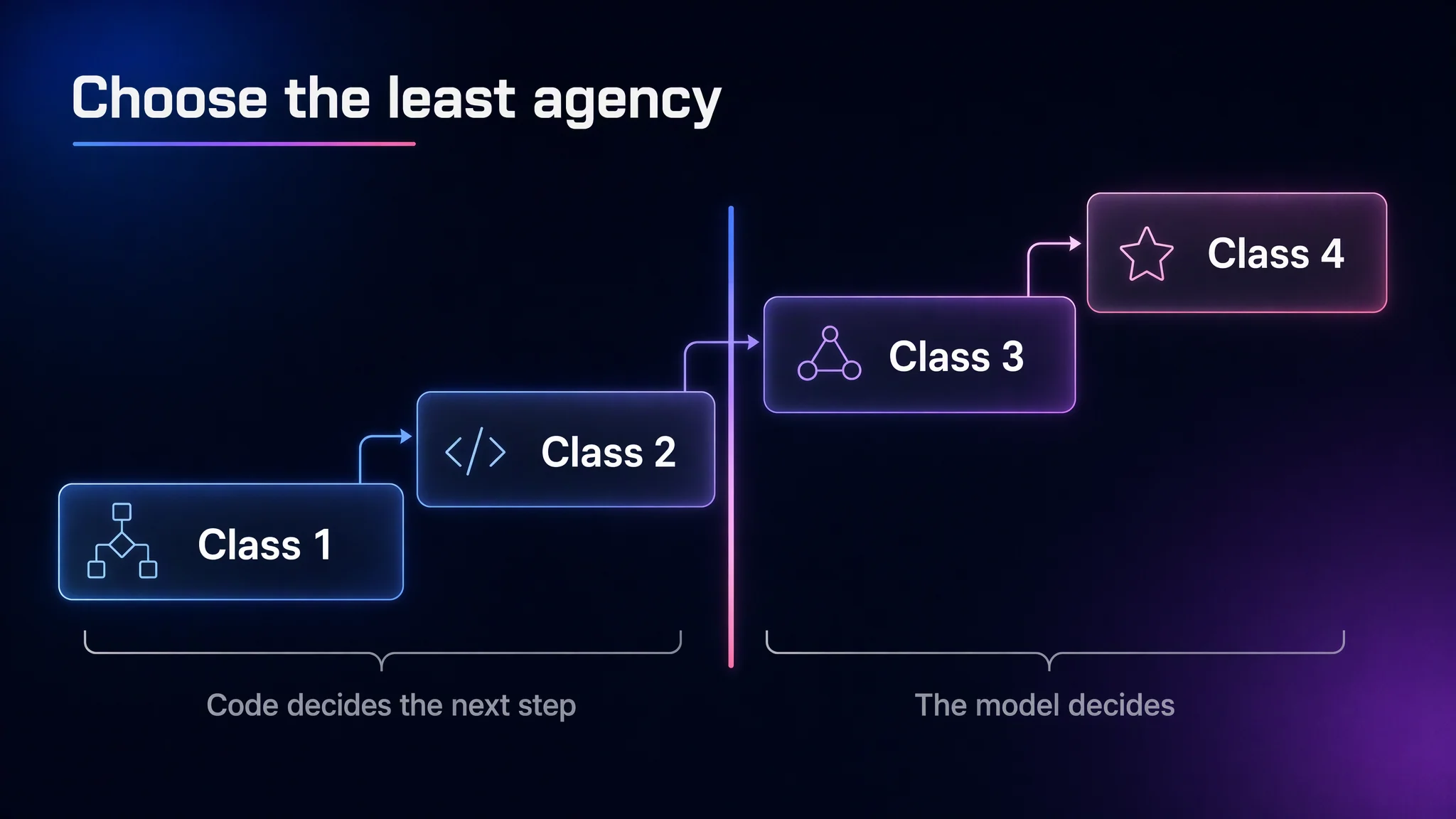
Choose the least agency
Four agency classes run from a fixed workflow, where code decides the next step, to an agent, where the model decides. Start at the lowest class that meets the need and climb only on evidence.
Read Choose the Shape of an AI Product -
02
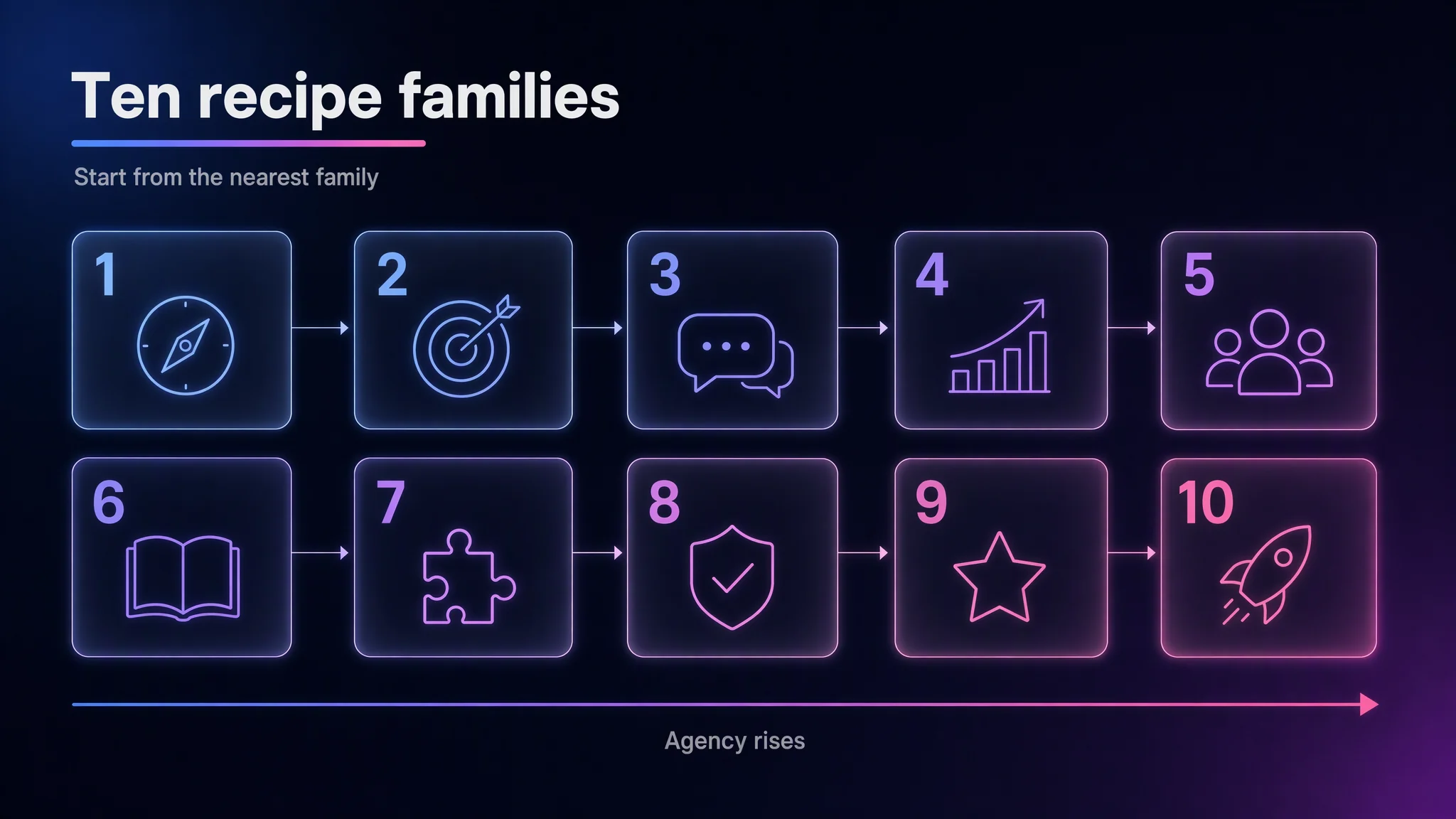
Start from the nearest recipe
Ten recipe families, ordered by rising agency, cover most of what a regulated firm will build with AI. A new product starts from its nearest family, not from a blank page.
Read The Ten AI Product Recipe Families -
03
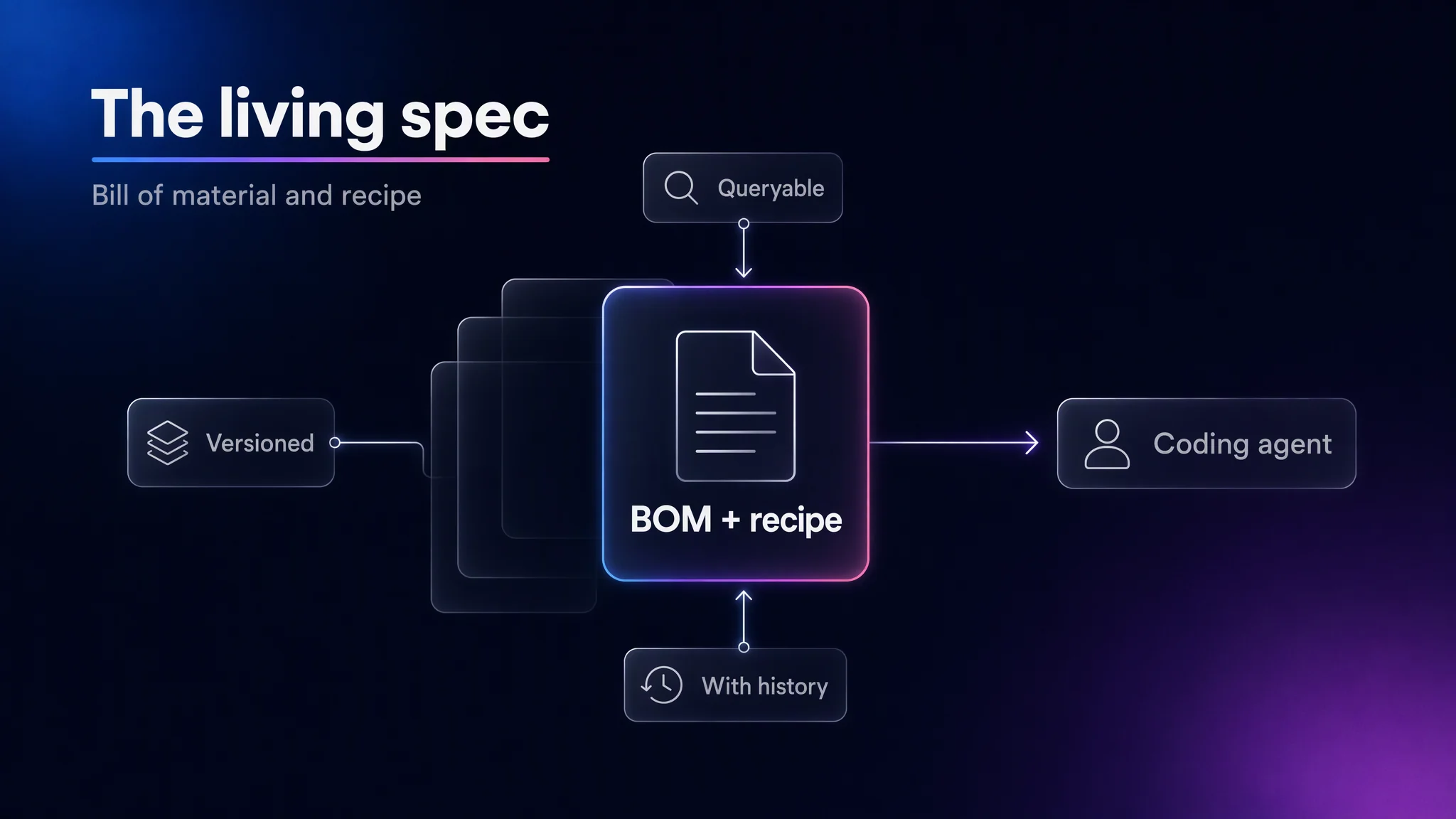
Keep one living specification
The bill of material and the recipe are one versioned, queryable specification with a history, and that specification is what the coding agent reads.
Read Build a Living Product Bill of Material and Recipe -
04
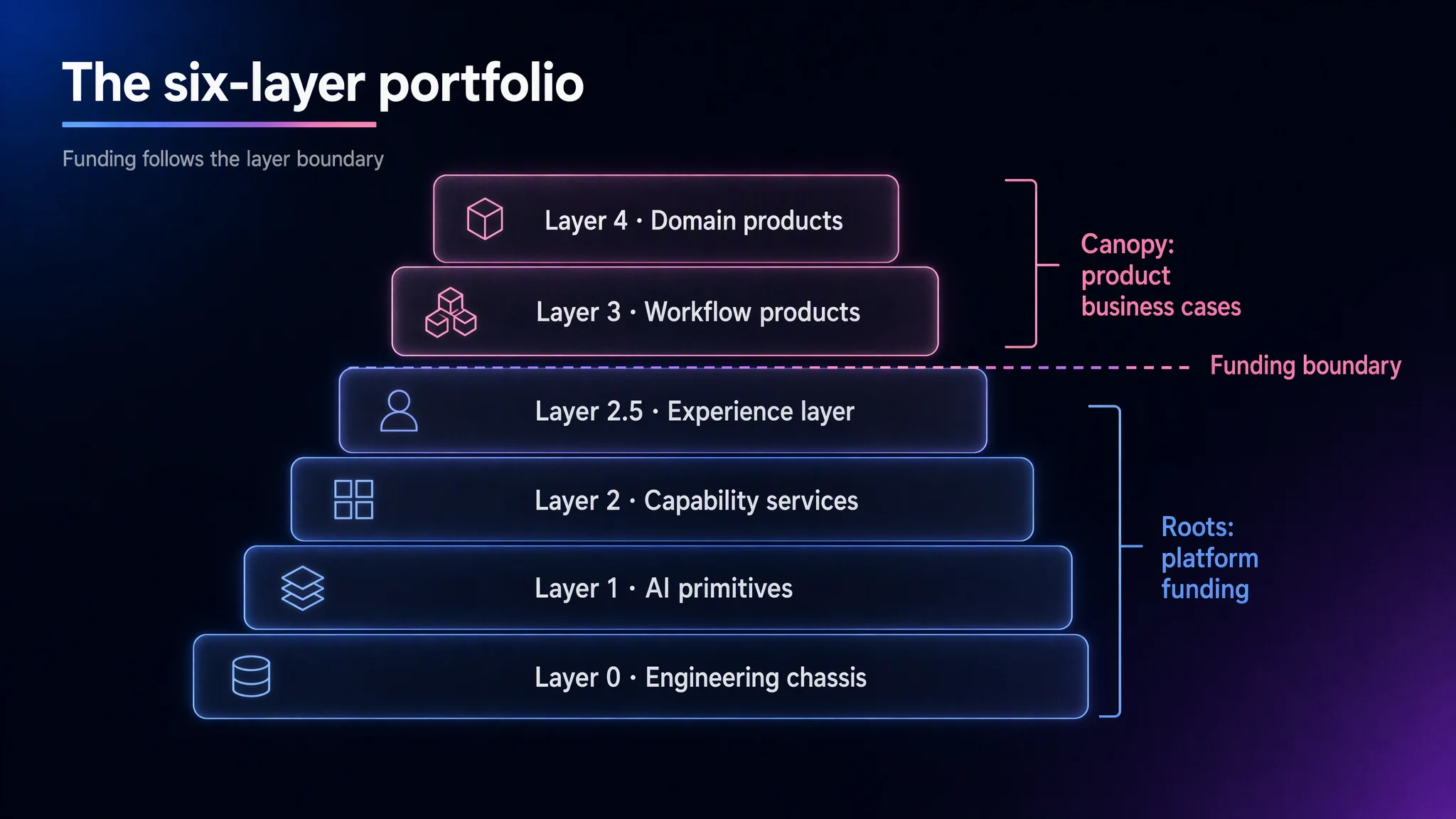
Fund along the layer boundary
Six layers, from the engineering chassis and AI primitives at the roots to workflow and domain products in the canopy. Platform funding pays for the roots; product business cases pay for the canopy.
Read Build the Standard Application Foundation -
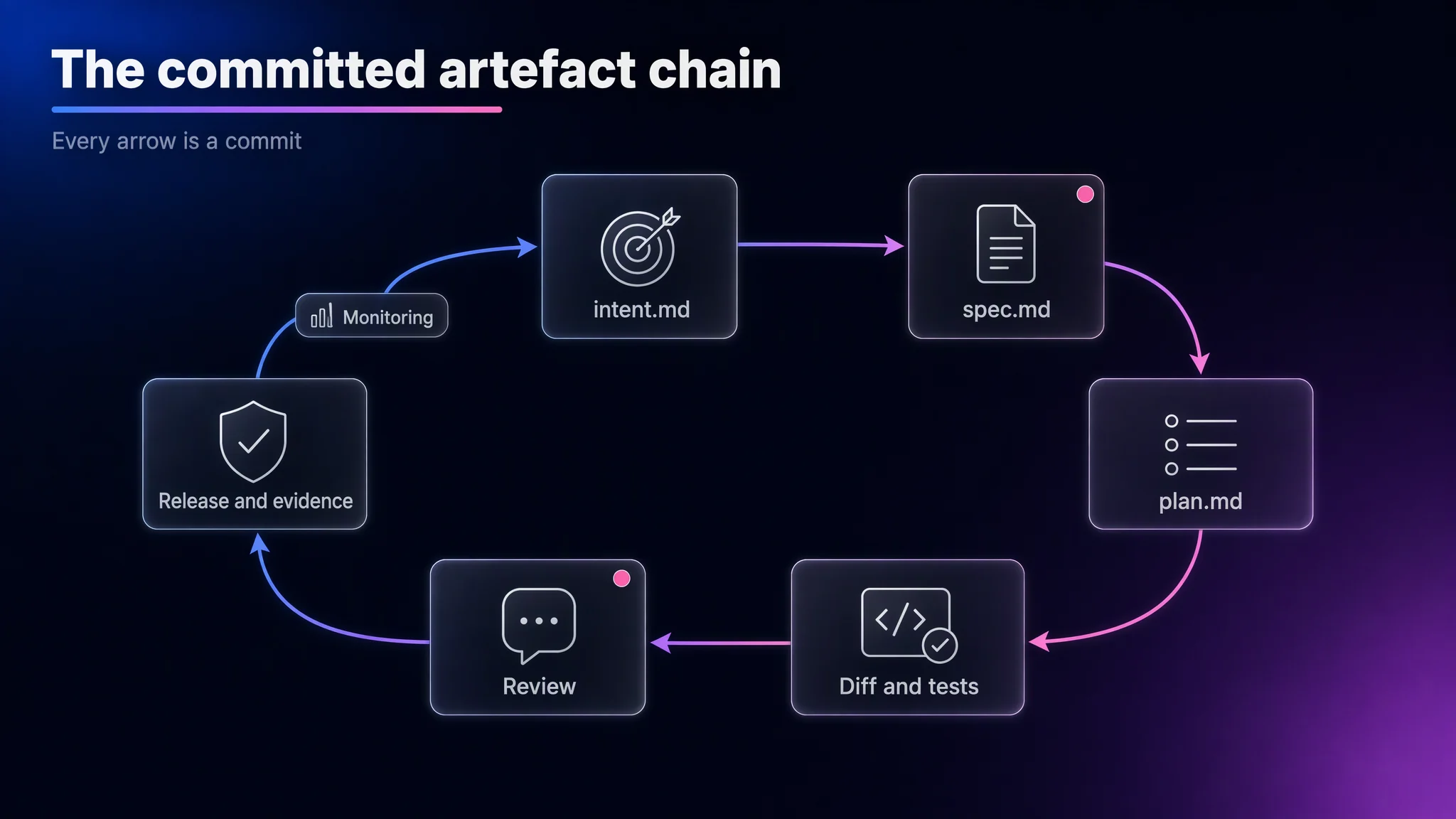
05
Make every step a commit
Intent, specification, plan, diff and tests, review, release and evidence: each step is a committed artefact, so the chain itself becomes the audit trail.
Read The Agent-Speed SDLC -
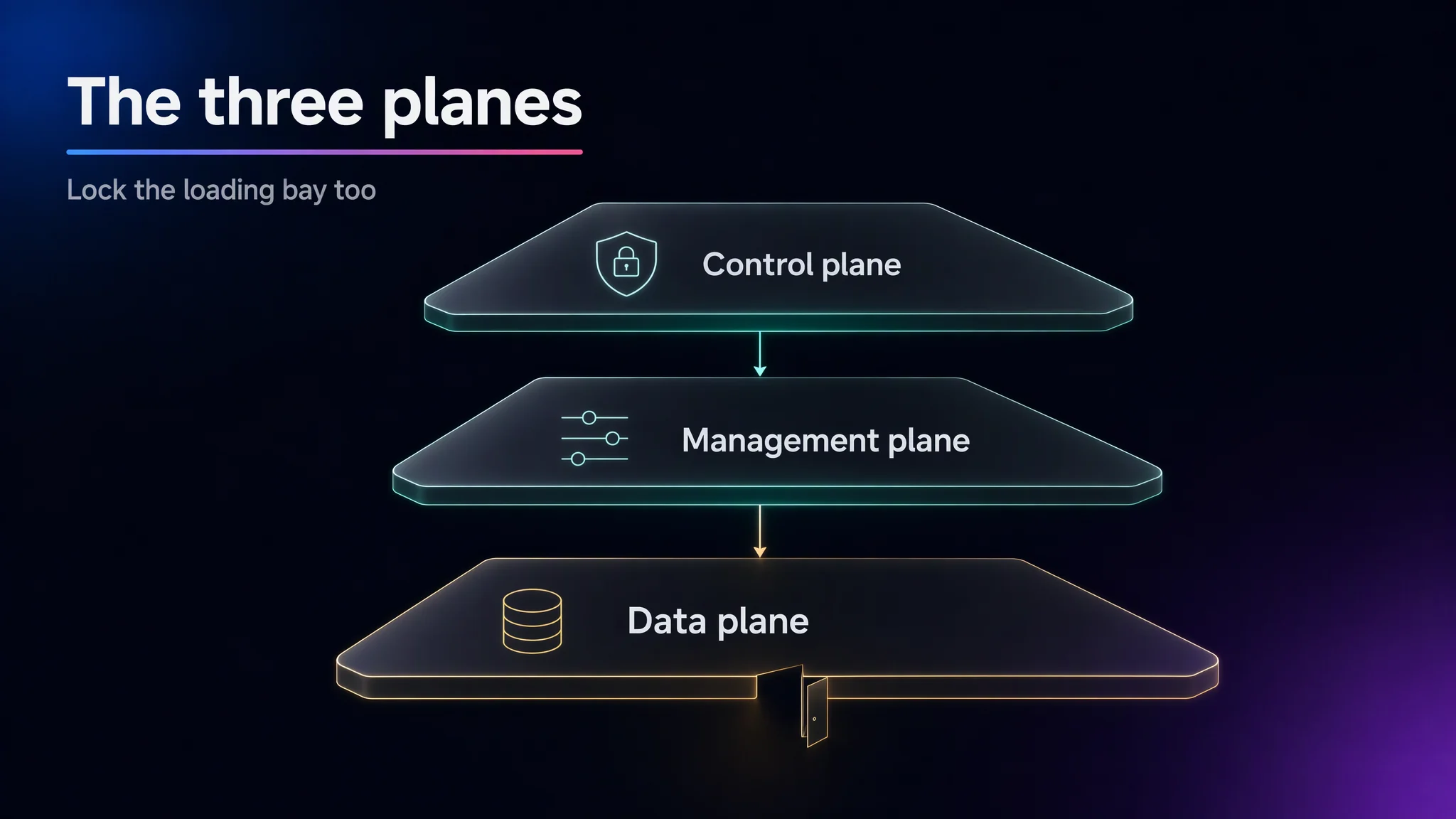
06
Lock the loading bay too
Every resource is reached through a control, a management and a data plane, and controls do not apply evenly across them. Governing the control plane alone leaves the data plane open.
Read Design the Cloud Production Line and Hosting Boundaries -
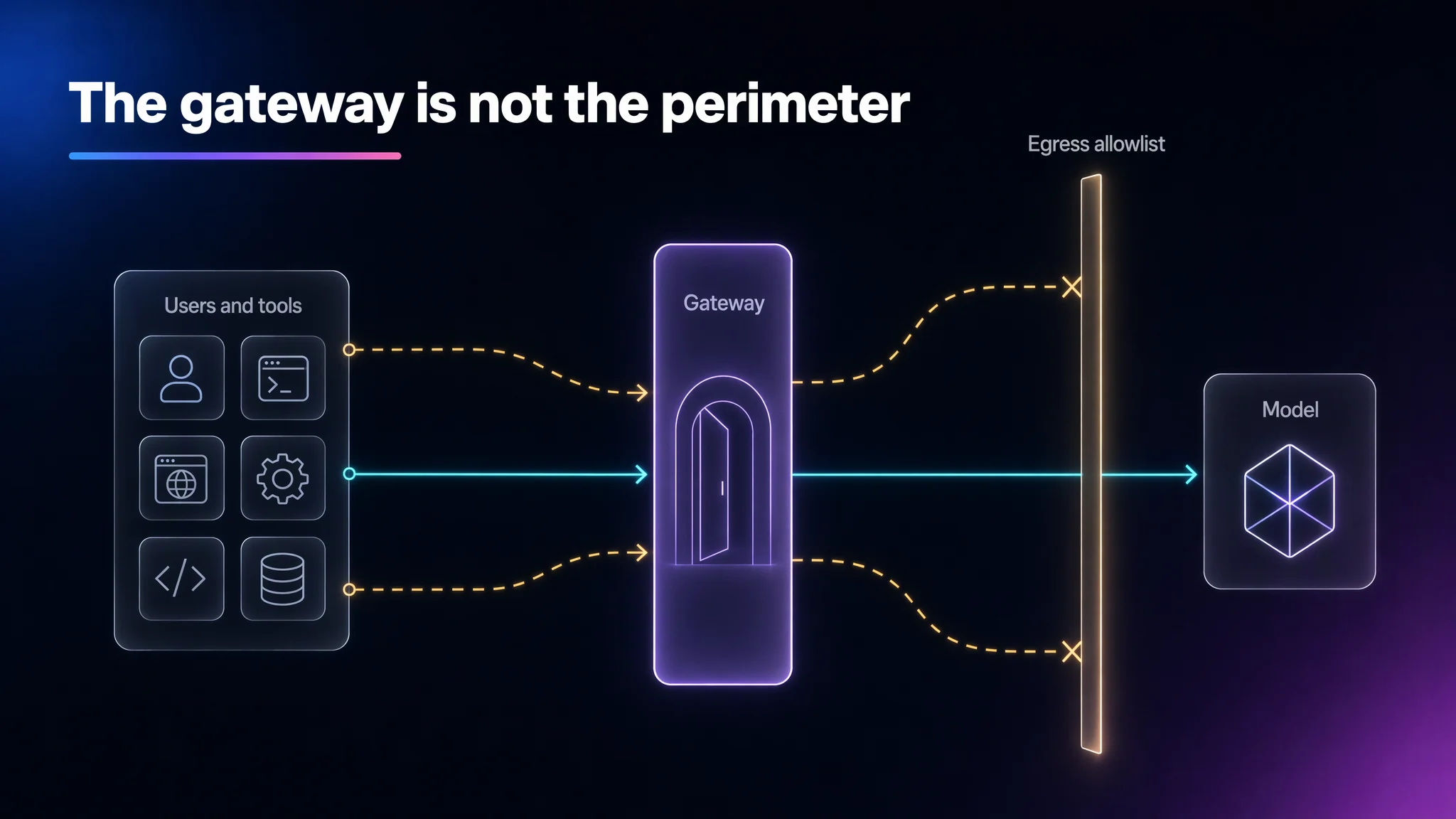
07
Make the gateway the only path
The model gateway enforces identity, policy, data handling and evidence. The egress allowlist is what makes it the only route to the model, and not just one of several.
Read Design and Operate the Model Gateway -
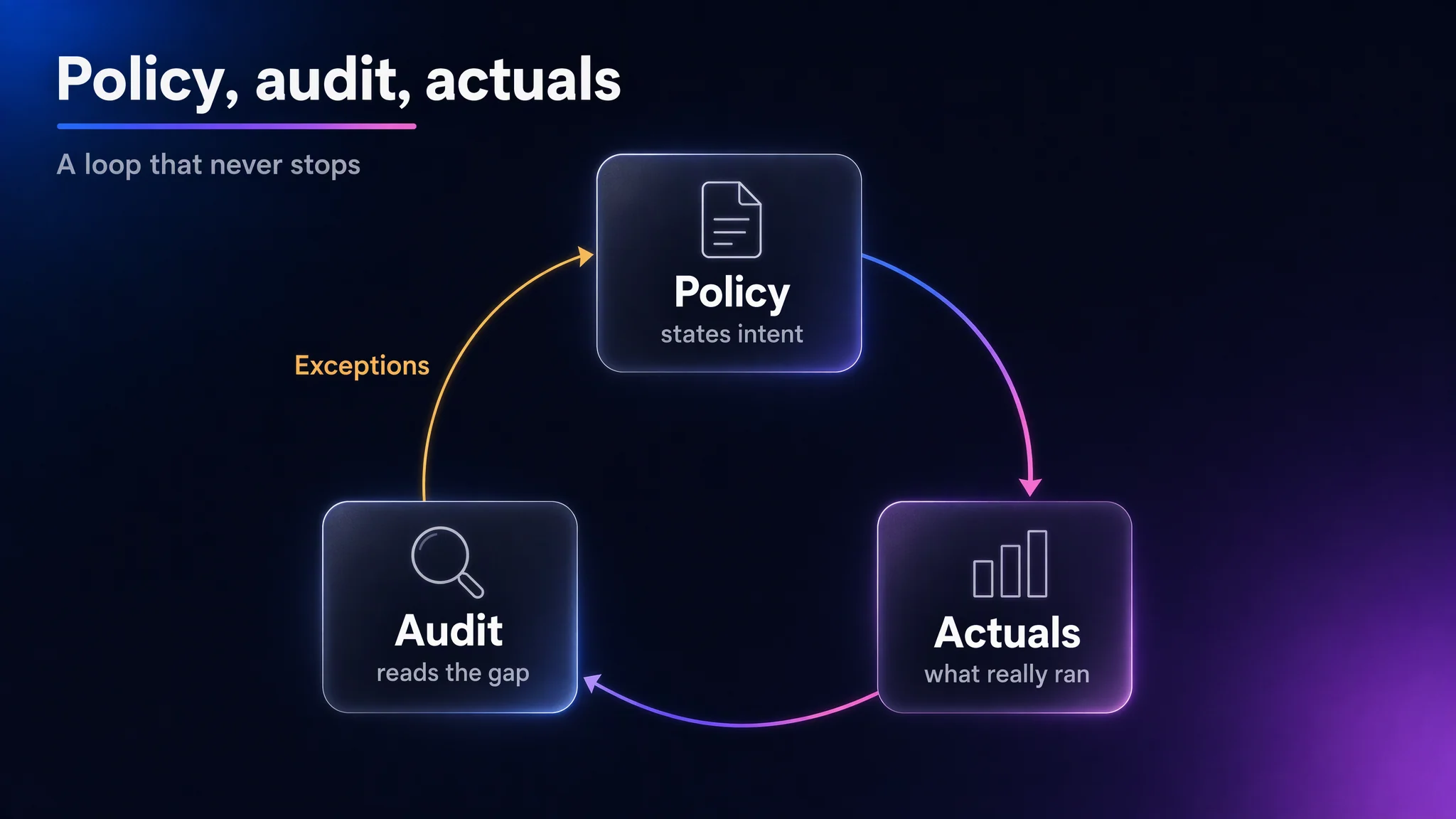
08
Run governance as a loop
Policy states intent, actuals record what really ran, audit reads the gap between them, and exceptions feed back into the policy.
Read Close the Policy, Audit and Actuals Loop
Start with a task
Where do you need to make progress?
The reference is organised around decisions and work, so you can enter where your problem starts.
The AI Delivery Factory: Operating Model
The factory's six connected parts, the control gap it closes, the handover curve that governs what agents may take over, and how to start one without rebuilding your tooling.
Choose the Shape of an AI Product
A least-agency decision sequence for choosing a product design: agency classes and their trade-offs, the eight questions, evidence for every step up, the consequence matrix that caps action scope, the cut-set review for agents, the other selection dimensions, and the design record.
The Agent-Speed SDLC
A committed artefact chain, governed context, trusted tests and eight SDLC controls that let coding agents work quickly while intent, review, identity and evidence stay connected.
Workflow Pattern
Use a workflow when code can determine the next step, even when some steps call a model: the eight workflow patterns with their forces and factory notes, why class 2 is the default, how code-orchestrated multi-agent flows stay workflows, how to codify a stable agent path down or delegate exceptions up, and a composite service-desk triage example read across frameworks and cloud pillars.
Bounded-Agent Pattern
A class 3 agent lets a model choose the next step, but only inside a registered, validated and enforced envelope of Mandate, Means, Memory and Monitoring.
Worked Example: Research Assistant
A composite Asset Manager X request is split into a grounded assistant and a deterministic routing workflow instead of a multi-agent research crew, then written down twice: as the ten-field design record and as a filled bounded-agency envelope, with two contrasting envelopes and their alert thresholds.
Reading paths
Follow a path for your role
I am designing an AI product
Choose the least agency that meets the need, then specify it.
I am building the platform
Put the shared controls in place before products and agents arrive.
- 1.The Enterprise Agent Control Plane
- 2.Prepare a Governed Landing Zone for AI Delivery
- 3.Identity, Secrets and Configuration for Agent Workloads
- 4.Data Classes, Processing Lanes and Tokenisation
- 5.Design and Operate the Model Gateway
- 6.Govern MCP Connectors Through a Broker
- 7.Coding-Agent Workstation Baseline (Claude Code)
I own risk, compliance or audit
Map obligations to controls, owners and evidence you can produce.
I am planning adoption
Sequence the programme, decide what to build and fund it on evidence.
Reference library
Browse by area

- The AI Delivery Factory: Operating Model The factory's six connected parts, the control gap it closes, the handover curve that governs what agents may take over, and how to start one without rebuilding your tooling.
- The Anatomy of an AI Application A six-tier view of what one AI product is made of, crossed by a trust and operations plane that attaches controls to every tier; what the factory already supplies per tier, how the anatomy maps to the six-layer product portfolio, and how to run an anatomy review.
- The Enterprise Agent Control Plane The firm-owned services that make every agent action identifiable, decidable, approvable and reconstructable: the ownership boundary, six planes and their contracts, the Policy Decision API with its latency budget, the persistence schema, the build sequence and the tests that show it works.

- Run a Discovery-Paced Portfolio How to decide which problems become products when construction is cheap: the selection rule and its evidence, the nine-field bet card, the kill clause, a retirement recipe run before promotion, and the promotion boundary, with owners, failure modes and acceptance checks.
- Build a Living Product Bill of Material and Recipe Describe what an AI product contains and how the firm builds it in one versioned specification shared by pipelines, agents and assurance teams, including the classification line, readiness grades and reuse generations.
- Choose the Shape of an AI Product A least-agency decision sequence for choosing a product design: agency classes and their trade-offs, the eight questions, evidence for every step up, the consequence matrix that caps action scope, the cut-set review for agents, the other selection dimensions, and the design record.
- Classify Use Cases into Risk Tiers The T0–T4 use-case taxonomy as a working decision reference: the prohibited-use gate, four intake questions, data and action boundaries per tier, the twelve-area control matrix, retention and payload rules, runtime enforcement, approval gates, regulatory routing and re-tiering.

- Assess Agent Readiness Across the Estate Check the estate's control foundations, grade the stations a change must cross on evidence, route work by the weakest station, fund readiness worst-first with a stated split, and make bought products machine-operable at renewal.
- Design the Cloud Production Line and Hosting Boundaries Classify, segment, constrain and observe every workspace at the plane where actions execute, choose hosting routes per request, and keep vendor maturity, contracts and exit equivalence dated and explicit.
- Identity, Secrets and Configuration for Agent Workloads Give every actor one owned identity, size its authority for the worst case, separate runtime from deployment, federate instead of holding keys, refuse impersonation and silent fallback, govern configuration by class, and audit the estate until flagged identities decline.
- Prepare a Governed Landing Zone for AI Delivery Design the management-group hierarchy, enforce guardrails in deny mode, give humans and agents the same paved workspace, integrate the eight agent-platform components, close the perimeter, and prove the zone is done with seven observable exit criteria and a second-line sign-off.
- Build the Standard Application Foundation Run the shared identity, telemetry, deployment, data and AI capabilities as a funded product that humans and agents both start from, with a contract, evidence-computed trust, a cheap promotion boundary and reuse measured by consumption.
- Coding-Agent Workstation Baseline (Claude Code) Put Claude Code on developer workstations and build agents as privileged automation: one device-delivered managed policy per surface, lock flags that stop rules merging upward, command hooks for enforcement and HTTP hooks only for evidence, the OS sandbox where it runs, telemetry by policy, and the workstation recorded as a processing location. Dated to November 2026.
- Govern APIs, Data Products and Retrieval Agents Can Trust Turn interfaces and data into owned, versioned capabilities that applications and agents consume under identity, entitlement and evidence controls, and give agents access to meaning, limits and authority, not only bytes.
- Data Classes, Processing Lanes and Tokenisation Classify every model request by its data, route it only to a processing lane the class permits, keep derived artefacts inside their source class, and treat retention, roles and tokenisation as recorded, testable decisions.
- Govern MCP Connectors Through a Broker Admit, tier, pin and enforce every MCP server through one registry and two enforcement points, keep tokens audience-bound, govern A2A delegation through its own registry and gateway, and expose client-facing agent channels only through the same policy layer.
- Choose and Contract Claude Deployment Routes Decide, per use-case class, which route carries Claude into production (Anthropic API, Claude Platform on AWS, Bedrock, Google Cloud, Microsoft Foundry, plus the Microsoft 365 Copilot surface); record who operates, bills and processes; size the diligence to the processor; check residency, zero data retention and HIPAA per feature; sign a contracting matrix row; and run Agent SDK or hosted agents with the controls the product does not supply. Provider-specific and dated.
- Design and Operate the Model Gateway Build the model gateway as the governed edge for every model call: per-client identity, per-request highest-class routing, tokenisation, pinned models, a conformant wire contract, a correlated evidence record, a tested concentration answer, and day-two cost, latency and reliability operations across two estates and three meters.

- The Agent-Speed SDLC A committed artefact chain, governed context, trusted tests and eight SDLC controls that let coding agents work quickly while intent, review, identity and evidence stay connected.
- Change Governance for Agent-Enabled Delivery Route agent-speed change by risk without losing the approver: control values that always reach a person, a routing gate that reads the right signals, autonomy earned per change family, a Virtual CAB that prepares a complete dossier, and three bodies with defined escalation.
- SDLC Component and Capability Catalogue The reusable starter-kit components and platform-shared capabilities every new application should inherit, grouped into four SDLC regimes, with the conventions to fix once, provider equivalents, owners, the mapping to the eight SDLC controls, a gap-analysis procedure and acceptance checks.
- Release Engineering for Agent-Written Change Move agent-speed change into production through five evidence-emitting stations: one change type per change, a reversal decided at authoring, a valid Deployer Manifest, a gateway that cannot be bypassed, hard health gates and at-most-once rollback.

- Build a Unified Control Map Join the firm's AI and technology controls in one traceable operating view: rows are operating concerns, columns are frameworks read at their own altitude, every cell points to live evidence, and existing ITIL, COBIT and CIS artefacts are extended to agents with a five-question test instead of a parallel AI governance track.
- Route Regulatory Questions to Obligations and Evidence A dated, article-level reference that routes AI design questions to the EU AI Act, DORA and its RTS, GDPR and sectoral rules, and turns each obligation into a control, an owner and evidence: change records under RTS 2024/1774 Art 17, the 4 h / 72 h / one-month incident clocks, the CIF hinge and its five artefacts, the three-count Register of Information reconciliation, Art 14(4) oversight controls, the Art 26(5) discharge, the FRIA gate, Art 49 and Art 50, SCHUFA-grade review and supplier controls.
- Regulatory Calendar for AI in EU Financial Services The stop-the-press calendar rebuilt as a dated register: AI Act stages after the AI Omnibus, DORA and its RTS/ITS, CTPP designations, ESA and supervisor guidance, national laws such as Italy's Law 132/2025 with corrected dates, and harmonised standards, each with status, as-of date, official source and the reference pages it moves, plus the change-trigger procedure for when an item moves.
- The Audit Spine and the Evidence Record How to capture, join, protect, retain and prove per-action evidence: the AES v0.1.0 record contract, three capture points and one correlation ID, tiered immutable storage, retention and legal hold, replay rehearsal, the route-approval evidence gate, and the Claude-specific ways evidence goes missing.
- Model Governance: Usage Registry and Upgrade Lifecycle Govern models at the grain regulators ask about: a catalogue for what exists, an 18-field usage registry for what is used, risk classified per usage, a registry the policy decision point reads by usage_id, pinned model IDs, and a four-phase upgrade lifecycle from Day −14 to Day +90 with numeric rollback thresholds.
- Close the Policy, Audit and Actuals Loop Run governance as a standing comparison of declared policy against emitted records, route only the exceptions to the second line, and govern the policy packs that drive the comparison.
- Accountability and Ownership Hold provenance and accountability apart on purpose: four named accountabilities per product, a human owner for every agent change, seven named seats, a signed Build/Run RACI and a first-line/second-line boundary that survives consolidation.
- Vendor Concentration and Exit Measure concentration on three axes against 70% and 85% discussion triggers, keep a tested successor for every material model usage, record eight contract-cleavage points per route, prove evidence portability with a 15-item checklist, and rehearse exit on one material use case every year with a filed close-out report.
- The Authority Process Generative output is never a record. Label drafts, cite their sources, and turn a draft into an authoritative record only through one owned, eight-step process per record class: validation, business rules, data quality, reconciliation, a named human approval with rationale, immutable audit logging, posting through a write API only the process may call, and a separation-of-duties check with a visible exception register.
- Operate the Agent Lifecycle Inventory, register, sign, zone, review, suspend, recover and retire agents through a six-stage lifecycle with named human ownership, zone-specific authority and evidence at every transition.
- Respond to Agent Incidents Sort an agent failure into one of four incident shapes, suspend it in three verified layers, keep humans on every classification and disclosure decision, route one playbook to every authority that needs a cover sheet, and close each incident with a named control change.
- Run the AI Delivery Factory Operate demand, capacity, the two worker classes, exceptions and evidence as one service: read two leading numbers, keep a handover backlog, gate construction on three conditions, run queues and alerts at agent volume, and count unused products as cost.
- Measure the Factory Read usage first, then the seven-dimension scorecard; emit a served-request event that separates human from agent callers; label every reported number by evidence tier; watch the two leading numbers of a control gap; treat an unexplained sharp improvement as an alarm; and never turn a participation metric into a target.
- Agent-Driven Departments What an Agent-Driven Department is and how to test for one, the six-system stack it runs and the order to build it, the measured agent share, and the consolidation boundary: what moves into the department, what stays with the CISO, CRO, DPO and the business, and the order in which to move it.
- Evaluate, Assure and Test Agent Resilience Define a versioned evaluation contract, test the trajectory and the execution boundaries, run three assurance layers into one quarterly pack, map the OWASP Agentic Top 10 to controls that demonstrably fire, bring agents into threat-led penetration testing with a five-section scope, keep a continuous cadence between formal tests, land every finding as a live control-plane artefact, and engineer recovery down to a minimal AI service level on models you host.

- Readiness Diagnostic Four self-assessment instruments at four altitudes: the six-question CIO self-diagnostic (can the firm govern agents at all?), the ten-pillar control-plane scorecard (0–60), station readiness (lowest of four, 0–3), and ten evidence-scored statements (0–20, pilot/building/running). How to score on records, how to read the results together without averaging them, and which page to start from for each weak answer.
- The Implementation Roadmap Sequence the factory as a dependency graph, not a calendar: the closure order for the governance gap, a written portfolio threshold, six overlapping phases over eighteen months with entry conditions, exit evidence, 'not yet' lists and pass/soft-fail/hard-fail gate questions, tranche funding released on exit evidence, a programme RACI, size, maturity and sector calibration with four signed trade-offs, and the first week, thirty days and ninety days in dependency order.
- The Factory Charter The one ratified document the factory's organisation, business case and operating model hang off: mission, mandate and decision rights, operating principles and ordered values, each value with an owner, policy, metric and veto. Covers the clauses to adopt, who drafts, co-writes, signs and ratifies them, how they compile into running systems, and how drift and decoration are caught.
- Build, Configure or Consume The layered sourcing decision: a signed portfolio threshold (8 products, 24 months, 3 shared patterns including shared data) decides whether building is available at all; Research Paper 7's four gates decide each capability; Book 2's five weighted dimensions score the contested cases. Covers the annual estate sort, the audit-log export clause for rented workflows, the model-sourcing breakeven test and register, and who owns what is built.
- Control Budget An author proposal for a CRO-signed limit on how fast change may arrive relative to the firm's capacity to understand it: the CIO runs the line, the CRO signs the band, only changes with a full record count, two weeks outside the band queues intake automatically, quarter-end widening is signed in advance, and someone outside the squad reviews what the budget held back.

- Workflow Pattern Use a workflow when code can determine the next step, even when some steps call a model: the eight workflow patterns with their forces and factory notes, why class 2 is the default, how code-orchestrated multi-agent flows stay workflows, how to codify a stable agent path down or delegate exceptions up, and a composite service-desk triage example read across frameworks and cloud pillars.
- Bounded-Agent Pattern A class 3 agent lets a model choose the next step, but only inside a registered, validated and enforced envelope of Mandate, Means, Memory and Monitoring.
- The Ten AI Product Recipe Families The ten recipe families and their design cards (flow, action scope, data classes, controls, evidence, evaluation, anti-patterns), how to fit a request and choose between neighbours, the pattern catalogue beneath them, the human duties each recipe must staff, who governs the catalogue, and the pipeline checks that catch family drift, families of one and orphans.

- Worked Example: Research Assistant A composite Asset Manager X request is split into a grounded assistant and a deterministic routing workflow instead of a multi-agent research crew, then written down twice: as the ten-field design record and as a filled bounded-agency envelope, with two contrasting envelopes and their alert thresholds.
- Worked Example: A Migration Through the Factory A composite data-centre exit walked as a reusable decision trail: purpose sheet, recipe boundary, inventory as a discovery control, the control loop, transform review with adversarial cases and business reconciliation checks, rehearsals run by role, and the effort test that tells a factory from a pile of tools.
- Worked Example: An Inspection Answered From the Record Composite supervisory walkthrough: for each question a supervisor asks about automated approval and agent actions, the evidence that answers it, the query that produces it, who runs it, and the questions the record cannot answer without a written rule.
Reference
Glossary, schemas and tools, primary sources and the source index.
- Glossary and Vocabulary Crosswalk The controlled vocabulary of the AI Delivery Factory reference, with a crosswalk for the places where the books, working papers and specifications use different words for the same thing.
- Schemas, Conformance Packs and the ops Toolchain What the versioned Supporting Tools schemas hosted under /aes/v0.1.0/ require, how to validate against them, where the source specification contradicts itself, and what the planned ops CLI, Claude plugins and service conventions define.
- Primary Sources and Open Checks The official texts this reference relies on (EU legal instruments with ELI links, DORA Level 2 acts, Commission and ESA publications, national law, standards, vendor documentation and the specifications hosted on this site), each with its identifier, the version or date it was read, its verification status and the pages that use it, followed by a consolidated register of the open fact-checks that still stand between a source claim and an official text.
A reference that is designed to evolve
This reference is growing in reviewable stages. Draft pages are visible in the local preview with their status and provenance; published builds include only pages that have completed review.
51 pages in this view · 0 marked Draft